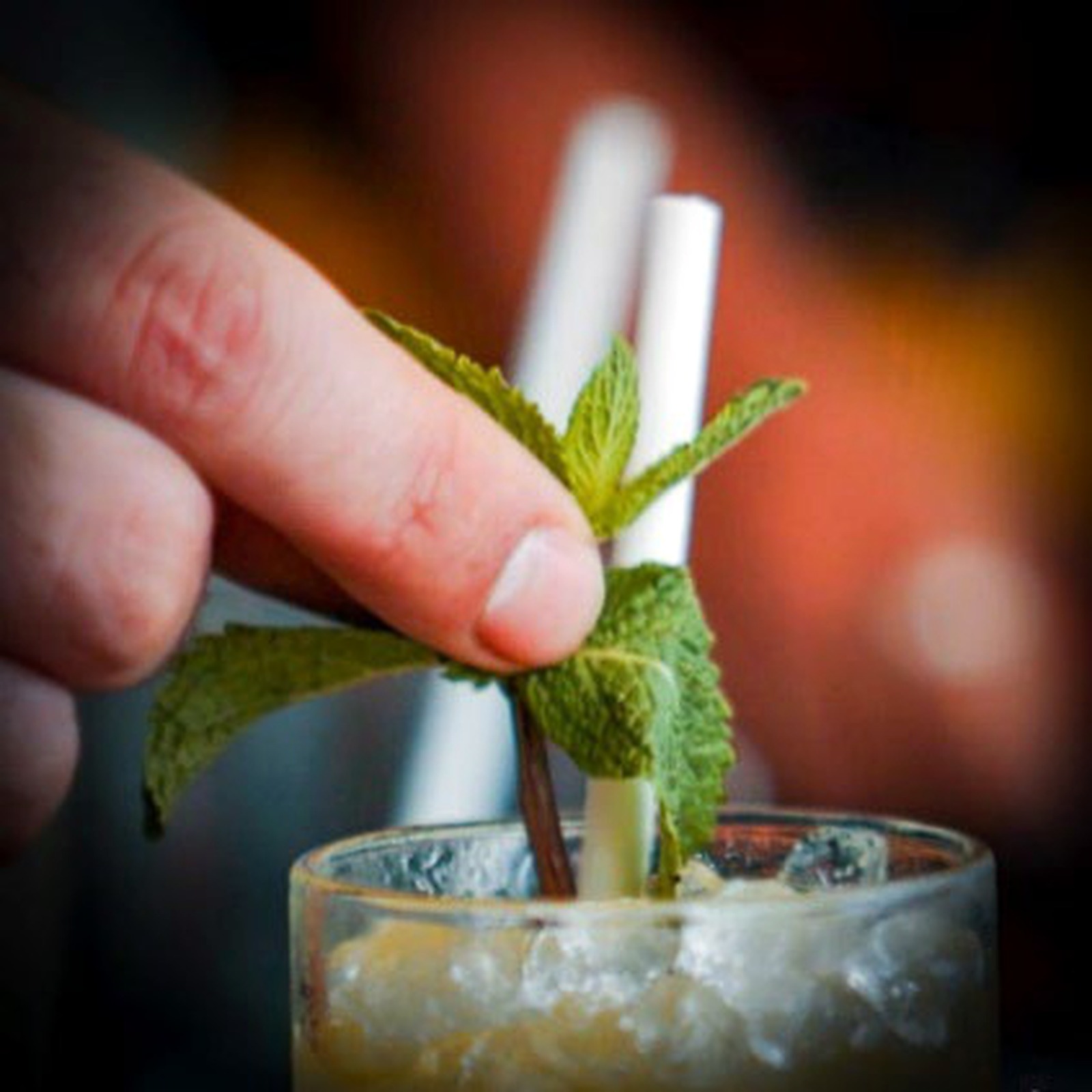
The nose encounters the garnish before the liquid. Orange peel expressed over an Old Fashioned releases aromatic oils across the surface. A mint sprig positioned near the rim adds a fresh herbal note to every sip. A half-rim of spiced salt lets the guest alternate between a lively opening and a softer taste. The right garnish prepares the palate without promising a flavour that is absent from the recipe.
Garnishes also make a menu easier to read. Two cocktails with similar colours become immediately distinct when one carries a rosemary sprig and the other a thin slice of dehydrated fruit. On a corporate signature cocktail menu, that visual consistency can extend a brand world, a season or the atmosphere of the venue.
1. Expressed citrus peel
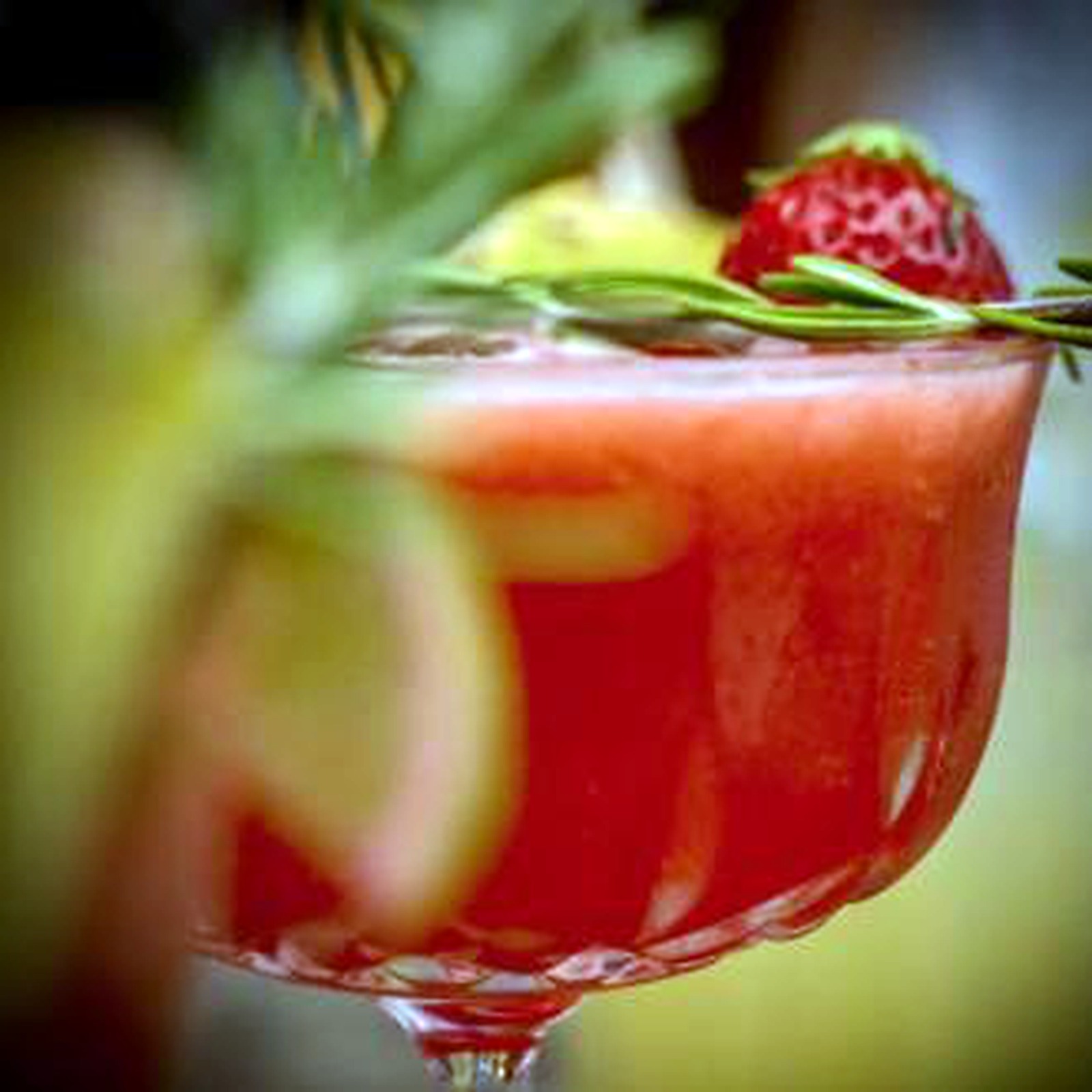
Cut a thin strip, hold it skin-side down and squeeze it over the glass. Lemon on a Martini, orange on a Negroni or grapefruit on a floral long drink adds a clear aroma without adding sugar.
2. Fresh herbs
Mint, basil, rosemary, lemon thyme and sage work when the recipe shares their aromatic profile. A light clap wakes up mint without damaging it. Crushed too firmly, the leaves darken and release vegetal bitterness. Rosemary can be warmed briefly to create a resinous note.
3. Dehydrated fruit
A thin wheel of orange, lime, pineapple or apple can be prepared in advance and remains consistent from one glass to the next. Its texture concentrates the colour without leaving juice along the rim. It is a reliable finish for higher-volume service.
4. Edible flowers
Pansies, borage, nasturtiums and cornflowers add visual delicacy. They must come from an identified food-grade supply chain. Never use a florist’s flower, which may have been treated with products unsuitable for consumption. When flowers have been foraged, the species must be identified with certainty and washed carefully, in line with the Food Standards Agency’s safe-foraging guidance.
5. A partial glass rim
Smoked salt, citrus sugar, raspberry powder or spices can sharpen a recipe. Cover only half of the rim so every guest can choose. Moisten it with citrus, place the glass gently into a shallow plate, then remove the excess.
6. A small complementary bite
An amarena cherry, candied ginger, an olive or a piece of roasted pineapple can extend the tasting experience. The portion should stay small and make sense with the cocktail. An overloaded pick makes service awkward.
7. A sensory finish
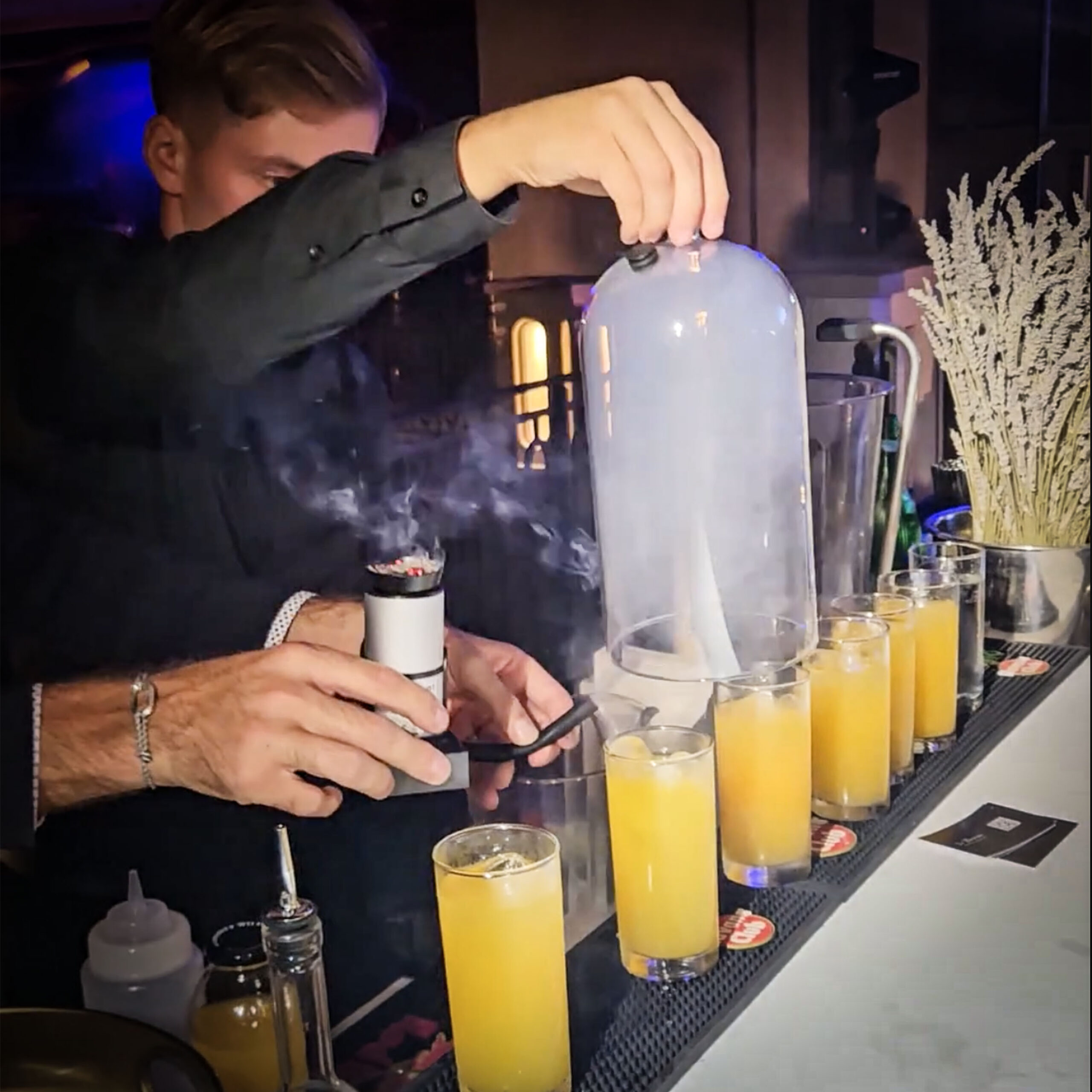
Foam, aromatic pearls, smoke under a cloche or a scented bubble creates a theatrical gesture. These techniques belong to a molecular cocktail experience and require specialist equipment and trained staff. The effect must reinforce aroma or texture, never hide a fragile or poorly balanced cocktail.
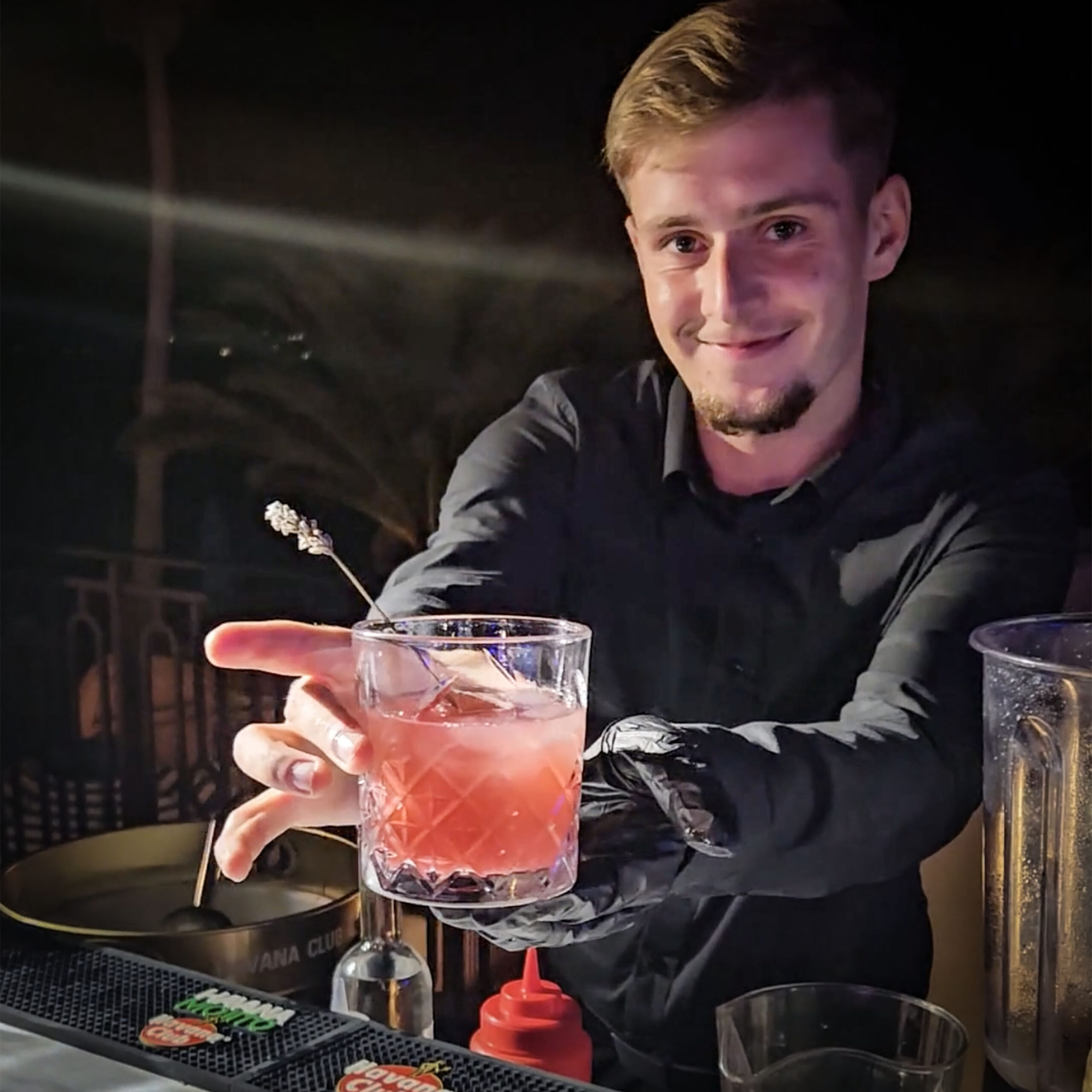
A beautiful finish that takes two minutes may work at home, but not in front of 80 guests. At an event, the garnish must be repeatable in a few seconds. Citrus peels are cut before service and protected from drying out. Herbs are sorted, washed, dried and refrigerated. Dehydrated fruit stays in an airtight box until the workstation is ready.
Arrange the garnish station in the same order as the cocktail menu, with one pair of tongs and one container for each finish. Three or four recipes remain more reliable than a collection of small variations. The same discipline applies to premium mocktails, whose presentation deserves exactly the same precision.
Before operating an event cocktail bar, make ten identical drinks in succession. If the garnish slows down the movement, falls into the glass or changes appearance after 20 minutes, simplify it. At a wedding, one edible flower and a fine citrus peel often look more elegant than a complex construction. Our guide to choosing a wedding bartender places this finishing work within the wider service.
Avoid thick fruit slices, non-food-grade flowers, tired herbs and decorations that touch the guest’s face. Allergens must also be anticipated when a finish contains nuts, sesame or a composed preparation. Anything touching the glass must be edible, traceable or clearly removed before drinking.
At an event, a garnish is rarely priced separately. It forms part of the recipe cost, preparation and service time. A complete package commonly falls between €9 and €13 excluding VAT per cocktail served when ingredients, ice, equipment and staff are included.
A citrus peel, herb or dehydrated fruit remains compatible with that range. Rare flowers, gold leaf, foam made to order or individual smoking increase preparation time and may take the recipe above it. The quote should state how many cocktails receive the special finish, the technique involved, the equipment required and the expected pace.
The right decision is not the most expensive decoration. Reserve the theatrical gesture for the signature cocktail and use faster finishes across the rest of the menu. One coherent detail, applied cleanly and repeated perfectly, always looks more premium than an accumulation of effects.