Matching the logo colour is not a direction. The work starts with an intention : What should guests feel? A press reception needs an immediately readable drink. A product launch can accept more surprise. An end-of-year celebration may call for spice and a warmer sensation.
That intention guides the spirit, acidity, texture and garnish. A citrus and basil highball suggests freshness. A smoked-tea sour creates depth. A red-fruit cordial topped with dry sparkling wine feels festive and refined. The flavour should tell the event's story before the cocktail name explains it.
Season also provides a natural framework. Spring favours botanical notes, citrus and flowers. Summer suits cucumber, yellow fruit, herbs and bubbles. Autumn brings pear, grape, tea and gentle spice, while winter supports preserved citrus, cinnamon and aged spirits.
A tasting before the event checks balance, the real colour in the chosen glass and how the garnish holds. That same coherence should reach the counter and service rhythm, turning a drinks choice into a complete event cocktail bar experience.
The useful test is not only whether one glass tastes good in a quiet tasting. The recipe should also be made repeatedly at realistic speed. Ice, dilution, foam height and garnish placement need to remain consistent after twenty serves, not just on the presentation sample. A signature drink earns its place when the fiftieth glass is as convincing as the first.
The common mistake is trying to place everything in one glass : Exact colour, company product, logo, branded name, visual effect and spectacular garnish. The result quickly becomes hard to understand, slow to make and sometimes unbalanced.
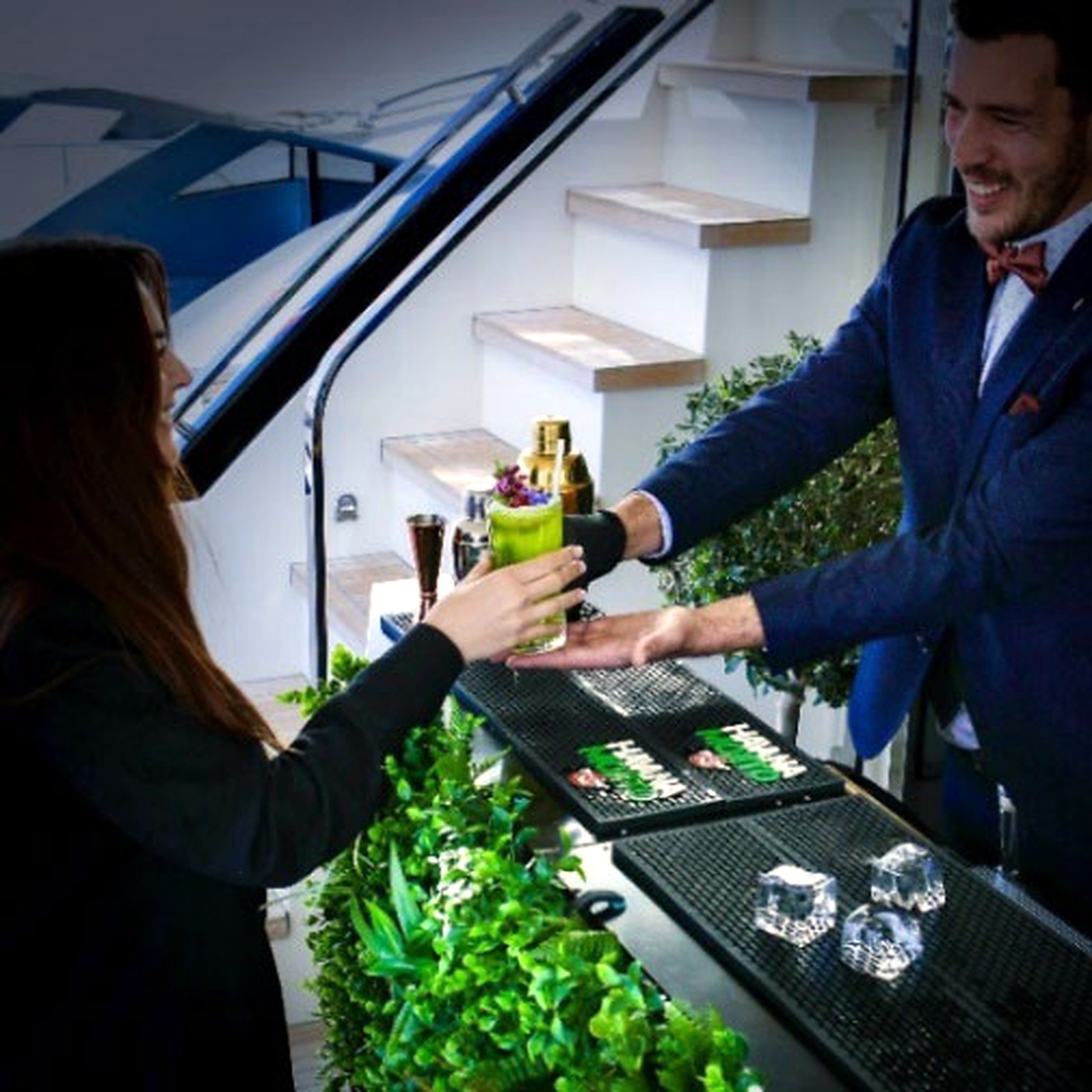
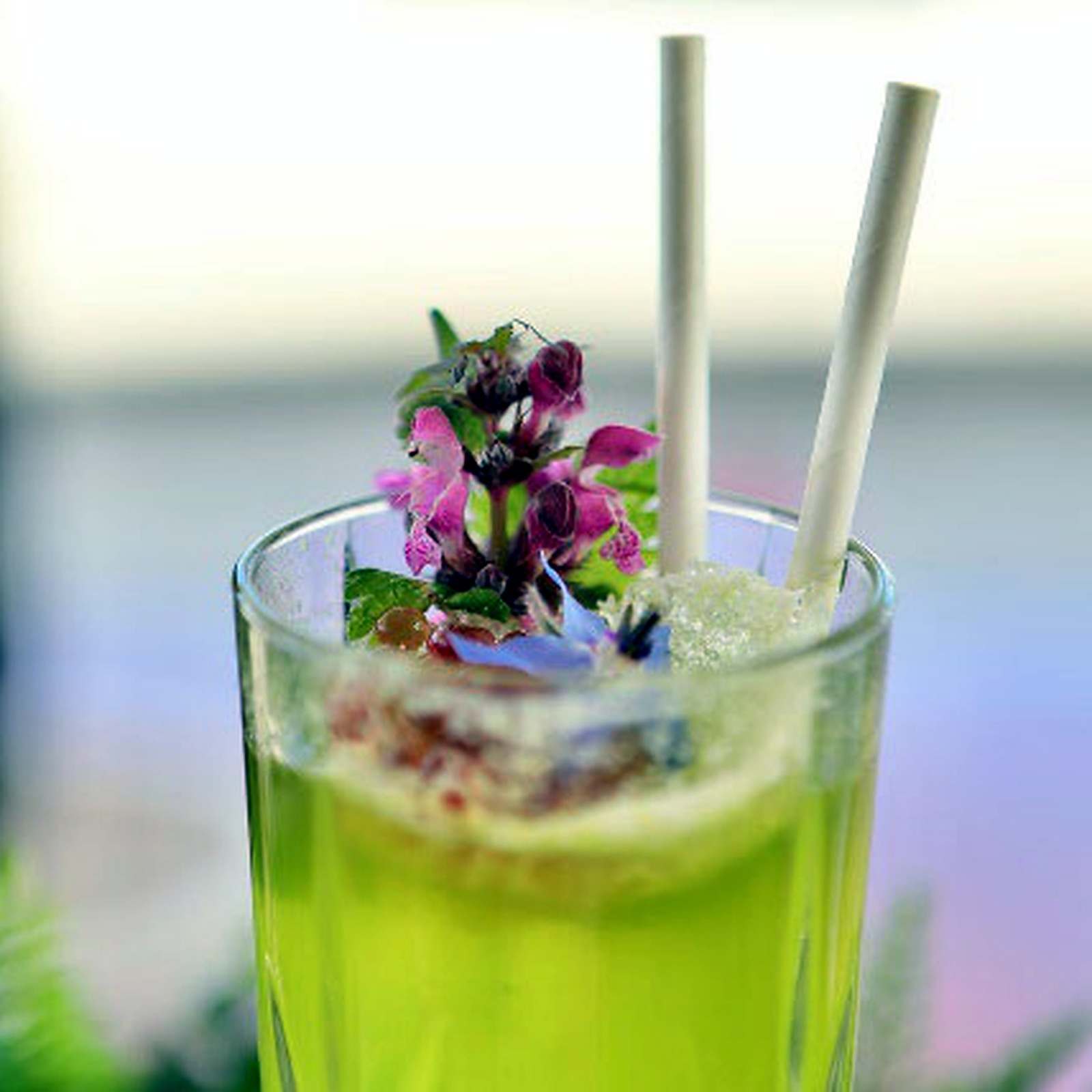
Choose one strong signal instead : A natural colour, an ingredient related to the company's story or a recognisable aroma. Everything else should serve the recipe. A light foam can carry a discreet mark. A green tone can come from basil, cucumber or a carefully prepared cordial. Personalisation succeeds when it feels inevitable rather than forced.
An alcohol-free creation should be developed from the beginning. Premium mocktails are not weakened copies of the main drink. They need their own balance, texture, aromatic structure and finish, while remaining visually connected to the event.
The name and printed menu can carry the more explicit brand message. This leaves the liquid free to remain balanced and enjoyable. A short description of the flavour and one discreet visual detail usually communicate more elegantly than several branded effects competing in the same glass.
For most professional events, three creations are enough : One corporate signature cocktail, one familiar recipe and one carefully built mocktail. A fourth option may suit a long reception. Beyond that, choice slows ordering, multiplies ingredients and makes consistency harder.
A recipe requiring six last-minute preparations will struggle during a peak arrival. Cordials, infusions and carefully calculated pre-batches preserve accuracy. Fresh finishing still happens in front of the guest, but the time-consuming work is controlled beforehand. Efficiency does not reduce creativity : It makes creativity repeatable, glass after glass.
Guest count, duration and service timing then determine volume. The guide to how many cocktails to plan for an event provides a starting calculation. Staffing and equipment should then appear clearly in the proposal from the chosen corporate event bartending service.
For full event bar service, market pricing generally sits around €9 to €13 excluding VAT per cocktail served. This normally covers ingredients, preparation, ice, equipment and staff, but every item must be confirmed in the quote.
For 100 guests drinking an average of two and a half cocktails each, the volume reaches about 250 serves. The indicative investment is therefore €2,250 to €3,250 excluding VAT, before special glassware, substantial staging, multiple service points or complex personalisation. A preparatory tasting and recipe development may be quoted separately.
The proposal should state the number of drinks, quantities, alcohol-free versions, duration, staffing, transport, setup and equipment collection. A coherent price is judged by what it includes, not only by its total. A precise estimate for an event cocktail bar always requires a complete brief.
No. A close colour created with coherent ingredients is better than an exact shade that damages flavour. Identity can also appear through aroma, name, glassware or garnish. Consistency matters more than reproducing a logo literally.
Not necessarily. One or two well-built alcohol-free creations are often enough when they are clearly visible and prepared with the same care. A mocktail should never feel like a fallback option.
Two to four weeks usually allows enough time for the brief, development, tasting and adjustments. A simple recipe can move faster, while a product launch, strict brand identity or multi-country project requires more planning.