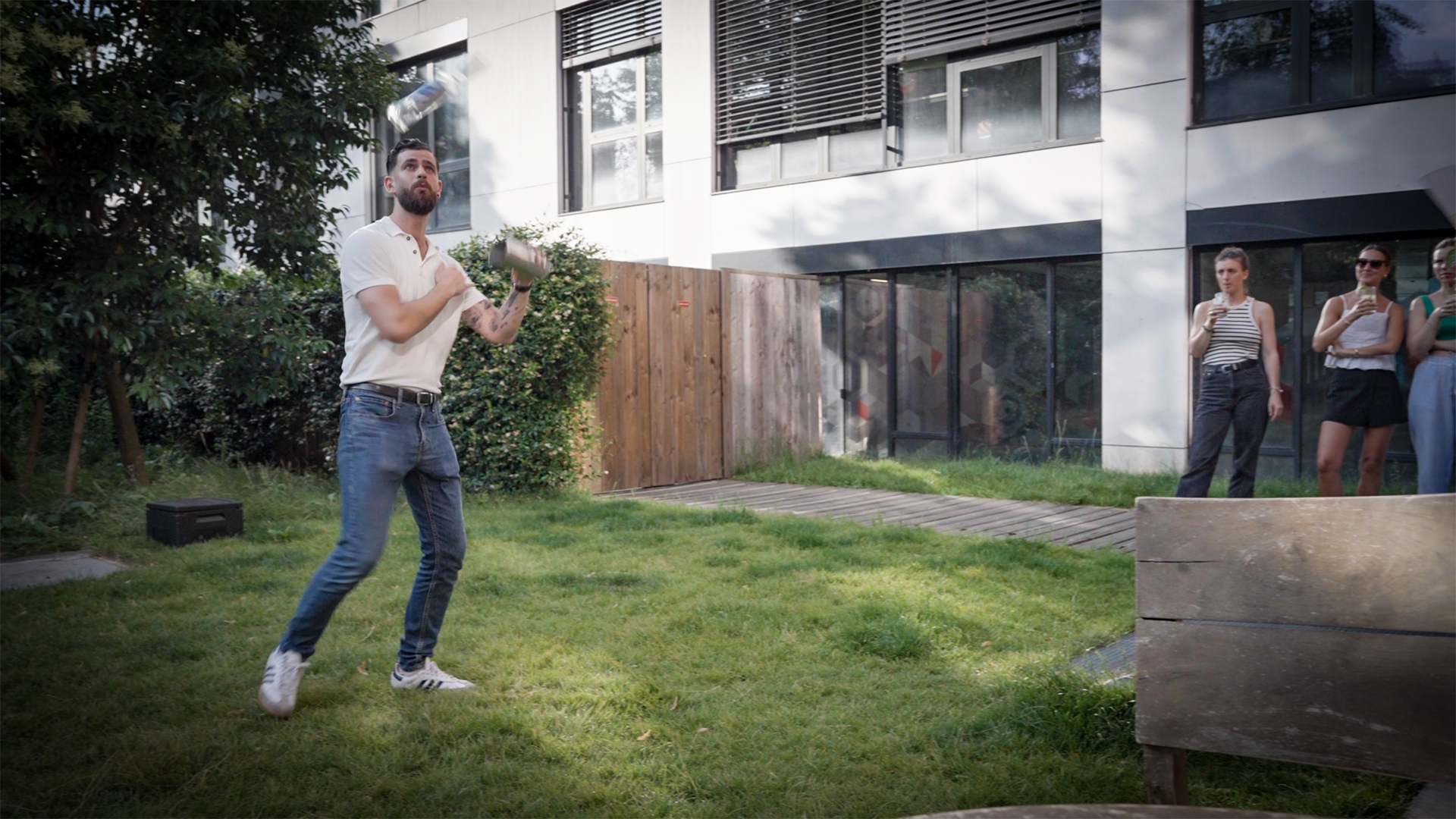
The reception cocktail hour is a short reception, generally lasting two to three hours, following the ceremony and preceding dinner. It brings all guests together in a relaxed format : People circulate, greet each other and taste a few standing bites. It is a moment of transition, welcome and first celebration. The bar plays a central role : With no assigned tables, conversations naturally organise around a glass.
The cocktail dinner is a longer format, often lasting four to six hours, where dinner is replaced by continuous service of small bites served standing or while guests move through the space. There is no structured “meal moment” : Guests circulate, snack, drink and dance. The bar becomes a permanent part of the evening, not just a welcome activity.
The confusion often comes from the fact that both formats use a cocktail bar. But the needs are not the same : Service duration, number of bartenders, estimated consumption per guest, signature cocktail personalisation options. Choosing the right format means sizing the bar service accurately.
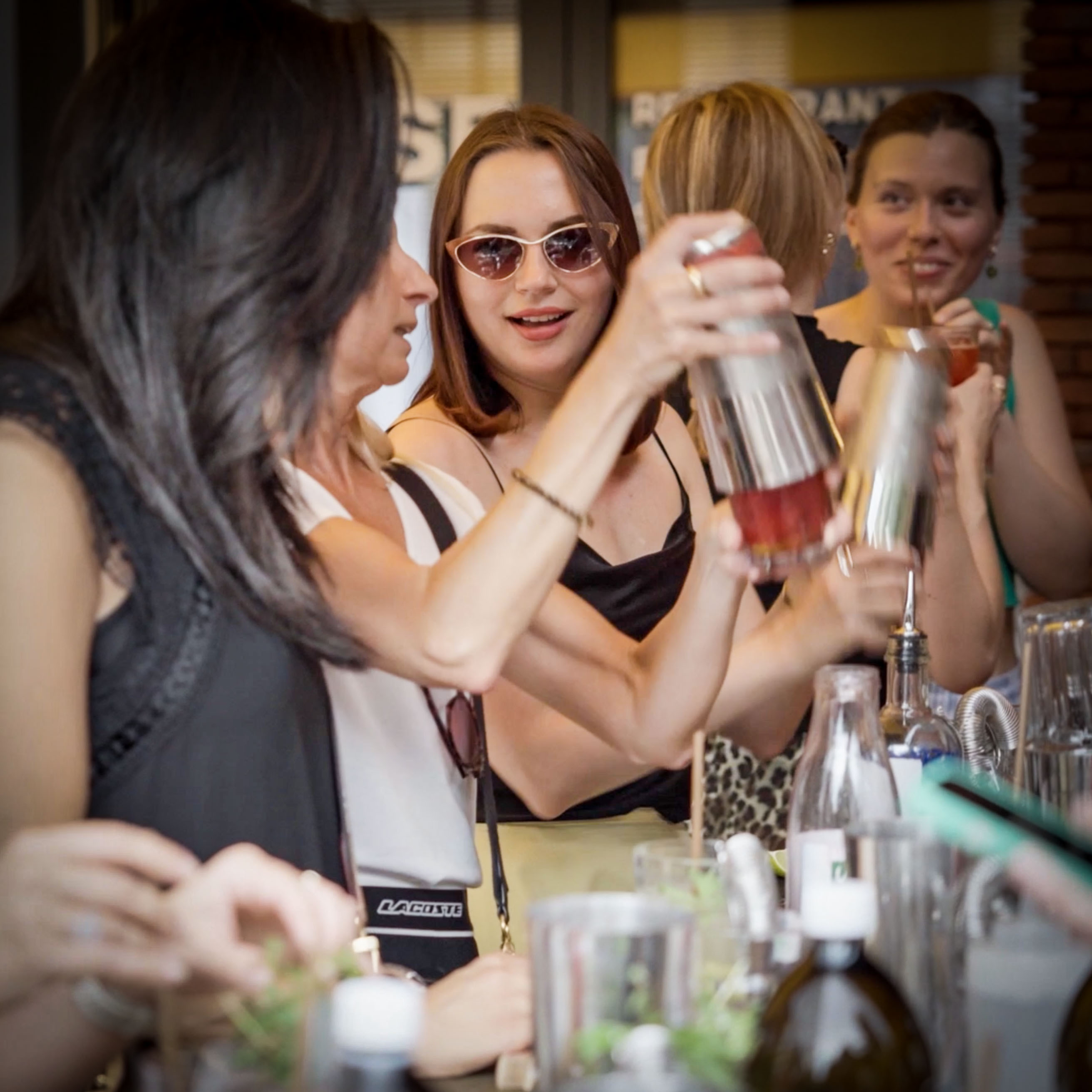
For a 2.5-hour reception cocktail hour, one bartender can handle 60 to 70 people while maintaining smooth service. The menu is generally tighter : Two to three signature cocktails, one mocktail option, sparkling wine for the toast. The goal is conviviality, not exhaustiveness. One bartender for 60 to 70 people : No bottleneck.
For a 5-hour cocktail dinner, the calculation changes. Consumption per guest is higher, and so is bartender fatigue. For 100 people over that duration, two bartenders are recommended. The menu is broader : Light welcome cocktails, more structured creations mid-evening, and one signature cocktail for key moments. The event cocktail bar must hold over time, not only impress at the opening.
In both cases, mocktails are essential. Pregnant women, designated drivers, guests who do not drink alcohol : They deserve an equivalent experience, not a basic fruit juice. A serious provider integrates this dimension from the first design stage of the menu.
The answer depends on several factors to cross-check with your venue and budget.
The reception cocktail hour + seated dinner works better for weddings with mixed age groups, children, older relatives, venues with an adjoining dining room, and couples who want a structured meal with speeches, wedding cake and tradition. The bar comes first, then dinner takes over.
The cocktail dinner only is ideal for unusual venues without a dining room, warehouses, rooftops, private properties, younger weddings with a strong festive component, or couples who want to maximise freedom of movement for guests. The bar and food bites run over the same duration, in a relaxed and lively atmosphere.
Some weddings combine both : Reception cocktail hour followed by seated dinner, then cocktail dinner late in the evening. In this case, the bar provider works across two distinct time slots with a menu evolving according to the atmosphere. It is the most demanding format, but also the most memorable. An experienced wedding bartender handles this transition naturally, without friction.
For a reception cocktail hour, the standard formula is a fixed counter or mobile bar installed at the entrance of the venue or on the terrace. Service lasts 2 to 3 hours. A single bartender may be enough for up to 80 people if the menu is properly calibrated.
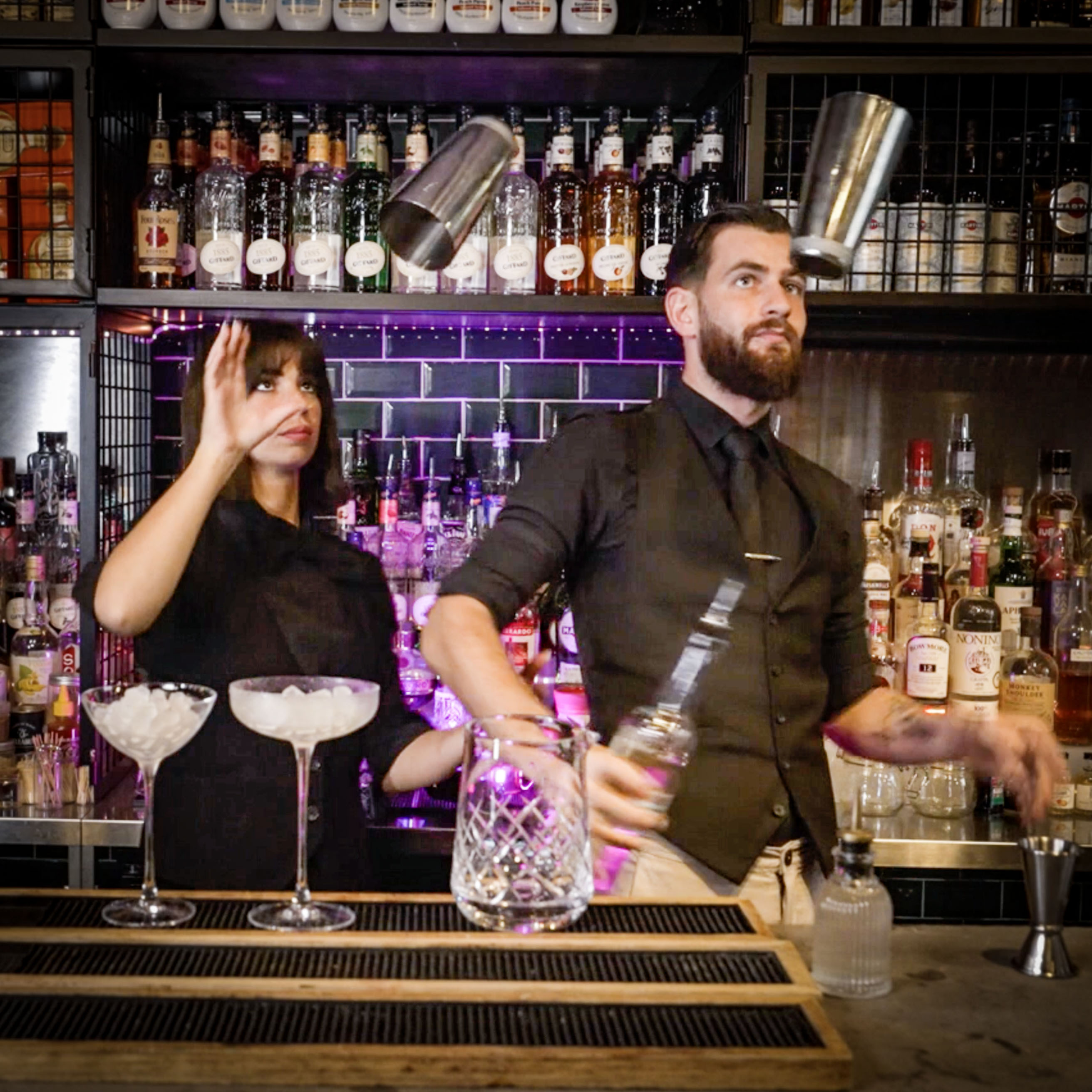
For a cocktail dinner, the mobile bar is often preferable : It can move according to the evolution of the space and accompany the different moments of the evening. Adding flair bartending mid-evening is particularly effective in this format : Bottle cascades, flying shakers, synchronised gestures : The show relaunches energy just when it begins to dip. The show never comes at the expense of taste.
The two formats do not have the same cost, and that is logical : Service duration, number of bartenders and estimated consumption vary considerably.
These ranges vary according to the provider, location and selected options. Ask for a detailed quote based on your precise configuration.