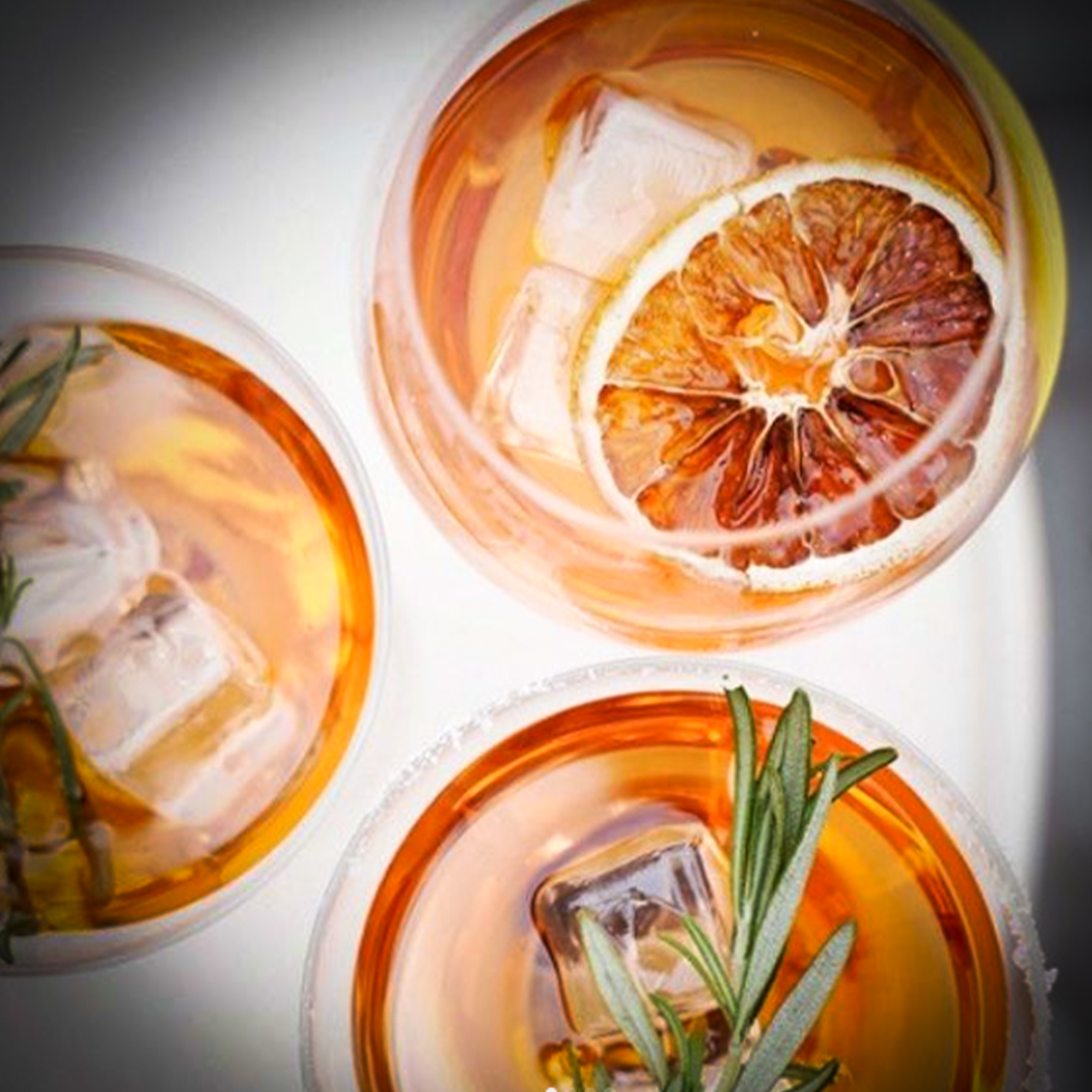
For 20 guests, a sensible estimate is 40 to 60 cocktails over two to three hours. For 30 people, allow 60 to 90 drinks. The time of day, the duration of the reception, the presence of wine or champagne and the guests themselves will all change that figure. Our guide to calculating how many cocktails you need for an event explains those variables in more detail.
A recipe served in a 150 to 180 ml glass requires approximately 3 to 3.6 litres for 20 portions, excluding ice. To turn any 20-drink recipe into 30 servings, multiply every quantity by 1.5. Two containers that fit in a refrigerator are better than one five-litre vessel. They are easier to chill, move and replenish.
Ice should never make up for a poorly calculated volume. For 20 people, plan on 4 to 5 kg, and more for an outdoor party or warm venue. It chills the drink, controls dilution and keeps bottles cold. I add a 20% safety margin because running short quickly produces warm, unbalanced drinks.
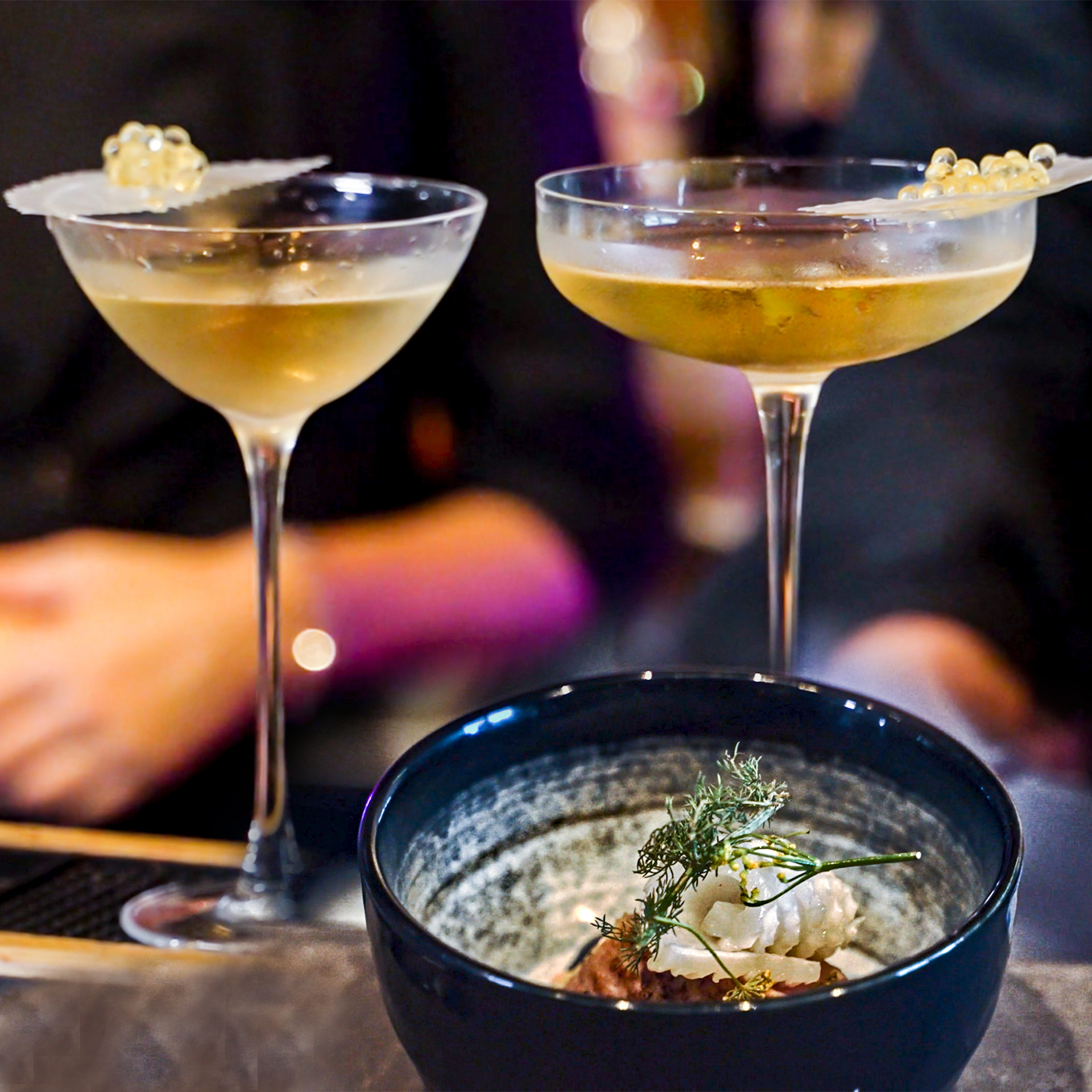
1. Fresh Mojito for 20 drinks
Combine 800 ml of Cuban white rum, 600 ml of freshly squeezed lime juice and 300 ml of cane sugar syrup. At service, pour the base over crushed ice, add eight lightly pressed mint leaves to each glass, then top the full batch with approximately 1.2 litres of soda water. A few dashes of Angostura bitters create a drier finish. Do not leave the mint in the batch for several hours. Extended maceration extracts vegetal bitterness and makes the final glasses taste noticeably less fresh than the first ones.
2. Purple Spirit for 20 drinks
This more distinctive recipe brings together gin, violet, cucumber, lemon, beetroot and strawberry. Mix 800 ml of gin, 600 ml of strawberry nectar, 400 ml of cucumber juice, 400 ml of lemon juice, 100 ml of violet syrup and 100 ml of beetroot juice. Add 800 ml of Perrier at the moment of service. The beetroot should support the colour without dominating the flavour. If it is the first note you taste in the test glass, reduce it before serving the batch.
3. Hibiscus, strawberry and elderflower mocktail for 20 drinks
Infuse and chill 1.2 litres of hibiscus tea. Add 600 ml of strawberry nectar, 300 ml of lime juice and 200 ml of elderflower syrup. Keep this still base refrigerated, then add 800 ml of sparkling water immediately before service. The result should be lively, floral and only lightly sweet. Premium mocktails require the same work on balance, texture and presentation as alcoholic recipes. Removing the spirit is not enough to make a convincing drink.
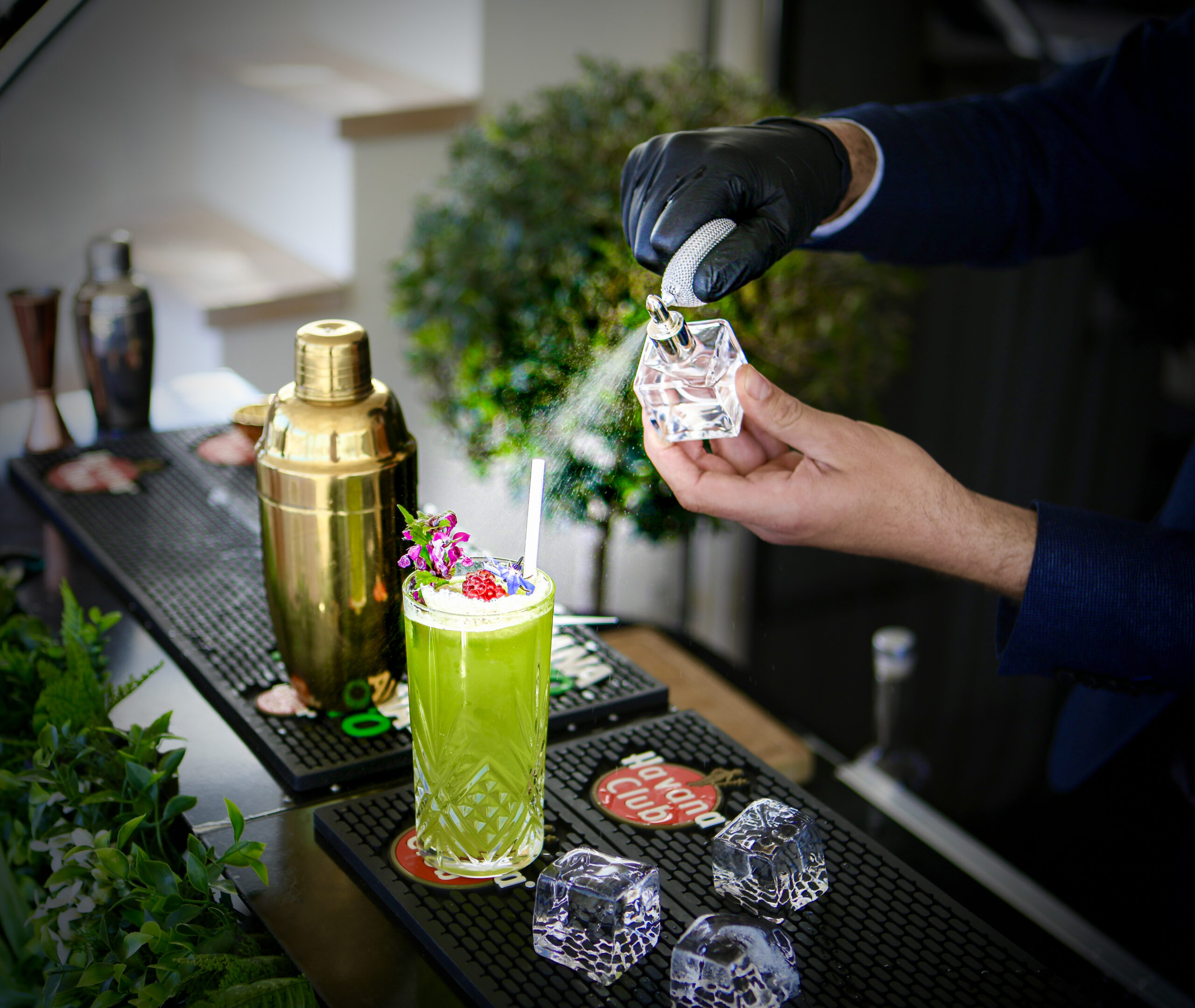
The day before, you can make syrups and infusions, prepare stable juices and measure the spirits. Fresh citrus is better pressed as late as practical and refrigerated immediately. Label every bottle with the recipe name, its volume and the order in which the final ingredients must be added. A precise premix removes unnecessary movements during service while preserving the identity of the cocktail.
Keep sparkling ingredients, ice, mint and delicate garnishes separate until guests arrive. Adding soda water too early removes the lift from the recipe. Leaving ice in a dispenser creates uncontrolled dilution. For the Mojito, keep the rum, lime and syrup base chilled, then add fresh mint, crushed ice and soda water during service.
Before the first guest is served, I always make one test drink with the base at its real service temperature and the ice that will actually be used. This is the only useful way to assess the final dilution and decide whether a small adjustment is needed. For a smoother reception, a private bartender at home can manage the setup, finishing touches and consistency of every glass while the host stays with the guests.
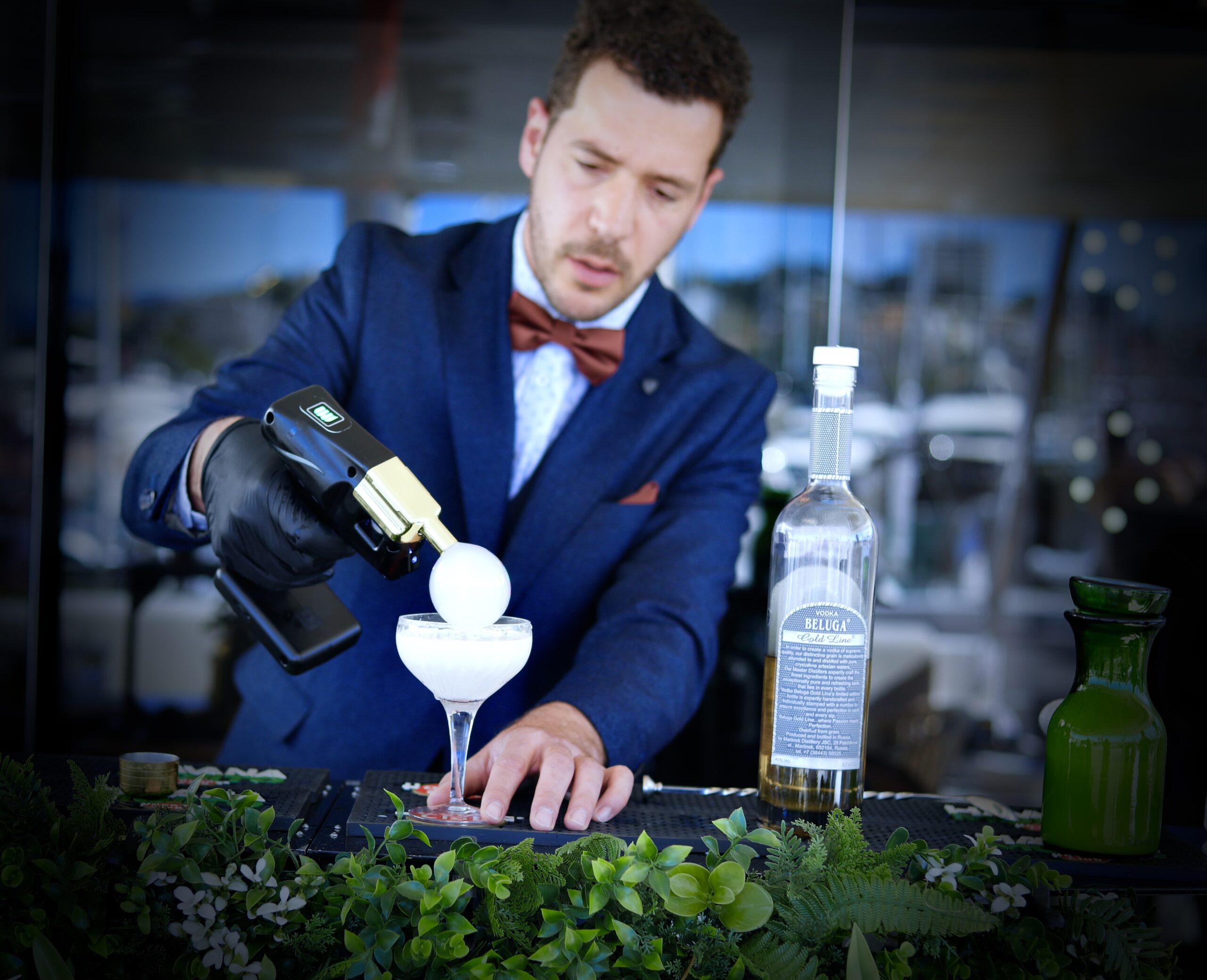
The budget depends less on the number of guests than on the level of service included. In the event market, a complete service commonly falls between €9 and €13 excluding VAT per cocktail served when ingredients, ice, equipment and staff are included in that figure. For 40 to 60 drinks, the simple arithmetic gives a range of €360 to €780 excluding VAT.
That calculation has an important limitation for small groups. Transport, installation and four hours on site remain fixed costs. A bartender alone is commonly priced at around €500 excluding VAT for four hours, before ingredients and equipment. A complete service can therefore cost more than the number of drinks multiplied by a unit price. Compare what each quote actually includes, particularly glassware, ice, preparation, travel and clearing down.
A quote for an event cocktail bar should state the quantities, number of recipes, equipment, glassware, duration and end-of-service arrangements. For a smaller reception, a private bar can be adapted to the available space and the desired level of bartender presence. A serious estimate always begins with the timeline of the party, not a package chosen without context.
Can batch cocktails for 20 people be prepared the night before?
Yes, for syrups, infusions and part of the premix. Fresh citrus, sparkling ingredients, ice, mint and garnishes should be added as late as possible to protect freshness, carbonation and controlled dilution.
How many cocktail recipes should you offer to 20 guests?
Two or three are enough. A short menu makes choices faster, limits unnecessary purchases and allows every recipe to be executed more consistently. A well-designed alcohol-free option should be just as visible as the alcoholic cocktails.
Which container is best for a large batch cocktail?
Graduated bottles or two dispensers that fit in the refrigerator are better than one large punch bowl. They make it easier to shake or stir the base, control volumes and keep a chilled reserve ready until it is needed.