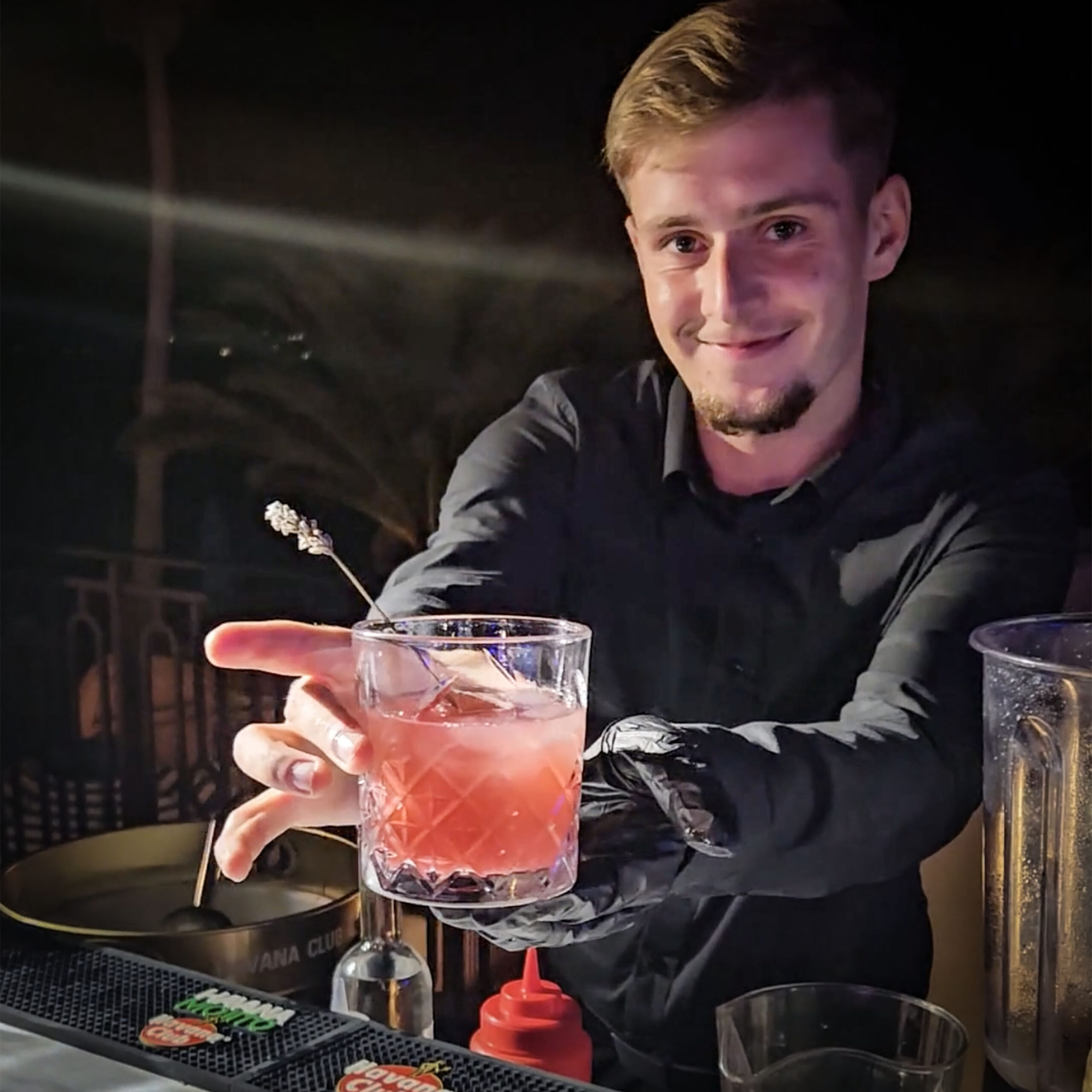
A good menu does not need to cover every family of spirits. For most birthdays, three cocktails and one mocktail are enough. Guests choose more quickly, shopping remains manageable and each drink can be made consistently. A shorter menu also makes it easier to chill every ingredient correctly and prepare the right glassware before the party starts.
The four options should offer complementary profiles : something fresh and herbal, a fruit-led recipe, a lighter long drink and an alcohol-free creation with a genuine finish. Timing matters too. Acidity and bubbles work well at the beginning of the evening because they feel lively and open the appetite. Later, a rounder, spiced or lightly bitter recipe suits the music and slower pace of the party.
The number of servings depends on the duration, the meal and the other drinks available. Our guide to calculating cocktails per person for an event helps establish volumes before you shop. For a smaller group, the recipes and service plan in our guide to batch cocktails for 20 people prevent the most common problems with dilution and temperature.
1. Raspberry, basil and gin
For one drink, combine 40 ml of gin, 20 ml of fresh lemon juice, 15 ml of raspberry syrup and three basil leaves. Shake with ice, fine-strain into an ice-filled glass and top with 40 ml of sparkling water. Raspberry provides roundness, basil extends the fresh aromatic note and lemon prevents an overly sweet finish. Press the basil lightly rather than tearing it into small pieces that will pass through the strainer.
2. White peach, elderflower and dry vermouth
Pour 40 ml of dry vermouth, 30 ml of white peach nectar and 10 ml of elderflower syrup. Add 60 ml of tonic water and finish with grapefruit peel. This lower-alcohol long drink works particularly well early in the evening. It is floral, gently bitter and less predictable than a standard Spritz, while remaining easy for guests to understand from the menu.
3. Pineapple, aged rum and ginger
Combine 40 ml of aged rum, 50 ml of pineapple juice, 20 ml of lime juice and 10 ml of vanilla syrup. Shake, pour over ice and finish with 40 ml of ginger beer. The ginger should add tension without masking the fruit. A thin slice of roasted pineapple creates a festive finish, can be prepared ahead and does not slow down service at the busiest moment.
4. Alcohol-free pear, jasmine tea and lemon
Combine 60 ml of pear juice, 50 ml of cold-infused jasmine tea, 20 ml of lemon juice and 10 ml of elderflower syrup. Top with 40 ml of tonic water. Pear adds texture while the tea creates a dry, floral finish. As with every menu of premium mocktails, removing the alcohol must never mean removing depth, contrast or presentation.
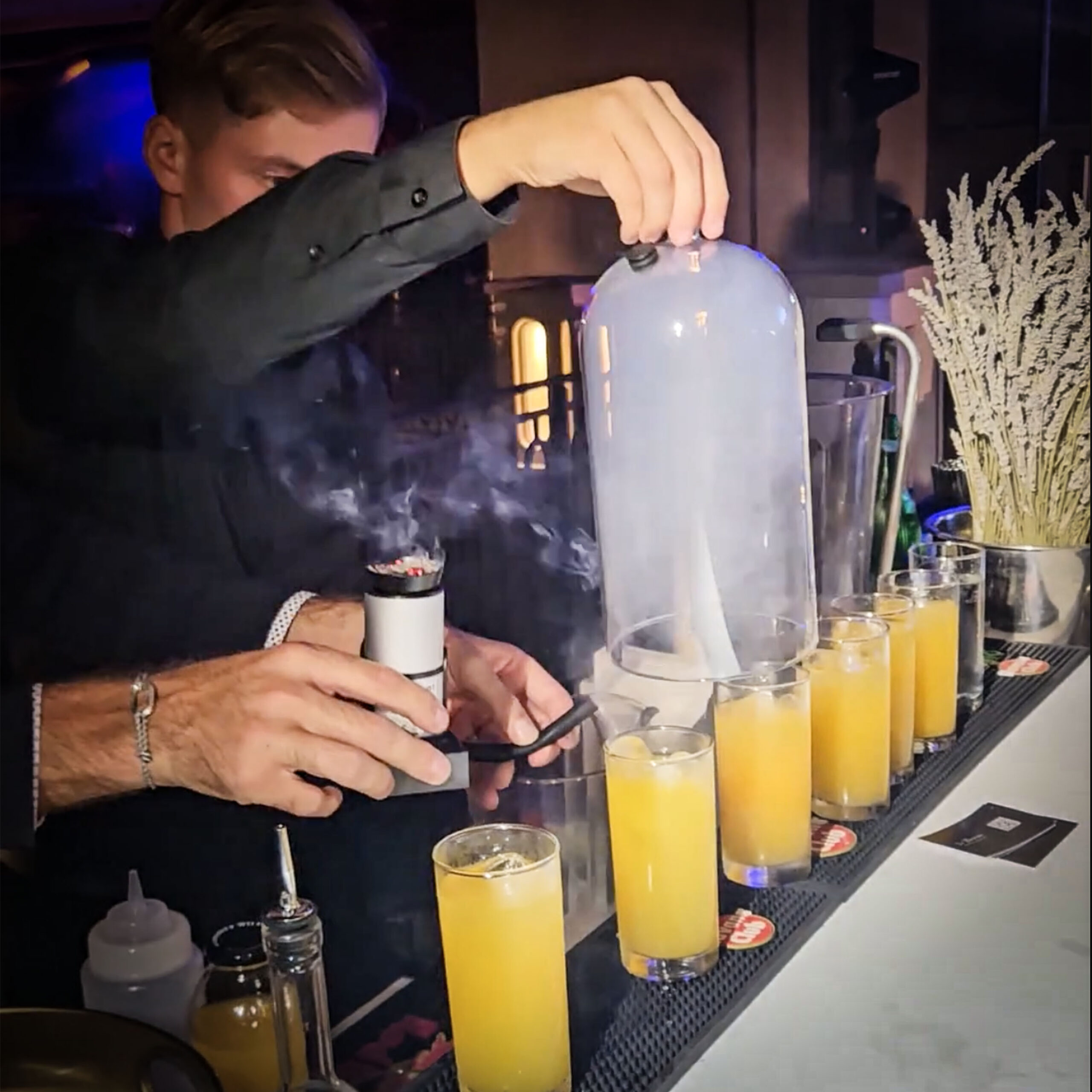
A birthday drink becomes personal when it begins with a genuine taste or memory : a favourite dessert, a destination, an herb grown in the garden, a familiar colour or a particular fragrance. That starting point can then be translated into balance. A memory of lemon tart might become a bright gin and lemon cocktail with a light meringue finish. A love of red berries could inspire raspberry, hibiscus and Timut pepper.
A signature cocktail does not need to be complicated to feel personal. Its name, colour and garnish should tell the same story. A five-ingredient recipe executed perfectly is more convincing than a spectacular construction that cannot be reproduced by the fiftieth drink. The personal element should remain visible even when the bar becomes busy.
The pace of service matters as much as the recipe. Juices, syrups and infusions can be measured in advance. Bubbles, ice, herbs and citrus garnishes stay separate until the last moment. A private bartender at home can handle the setup, finishing touches and clearing away while the host stays with the guests. A private bar is better suited when the menu and decor need to become a central gathering point.
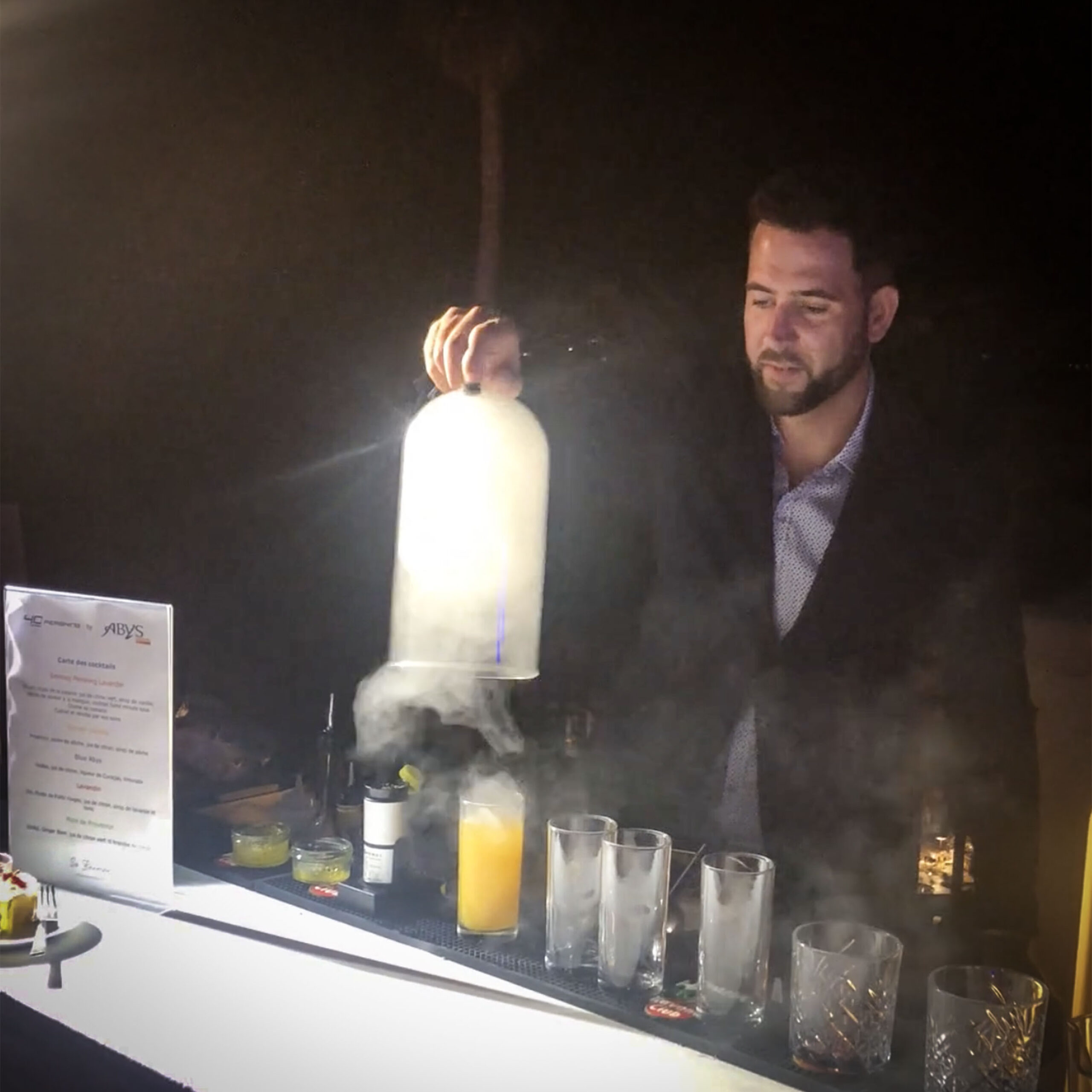
In the event market, a complete service generally costs between €9 and €13 excluding VAT per cocktail served when ingredients, ice, equipment and staff are included. For 60 to 90 drinks, the part directly linked to service therefore represents €540 to €1,170 excluding VAT.
For smaller groups, a per-drink calculation does not tell the whole story. Travel, bar installation, several hours on site and clearing away remain fixed costs. The quote should specify the number of recipes, glassware, ingredients, duration, staff and what happens after the final drink. The right price is the price of a clearly defined service.
Preparing everything yourself costs less when the guest list is limited and the bases are made in advance. Once the party exceeds 30 people, or several recipes must be shaken to order, an event cocktail bar mainly brings fluidity and consistency. The host can then enjoy the birthday at the same pace as everyone else.
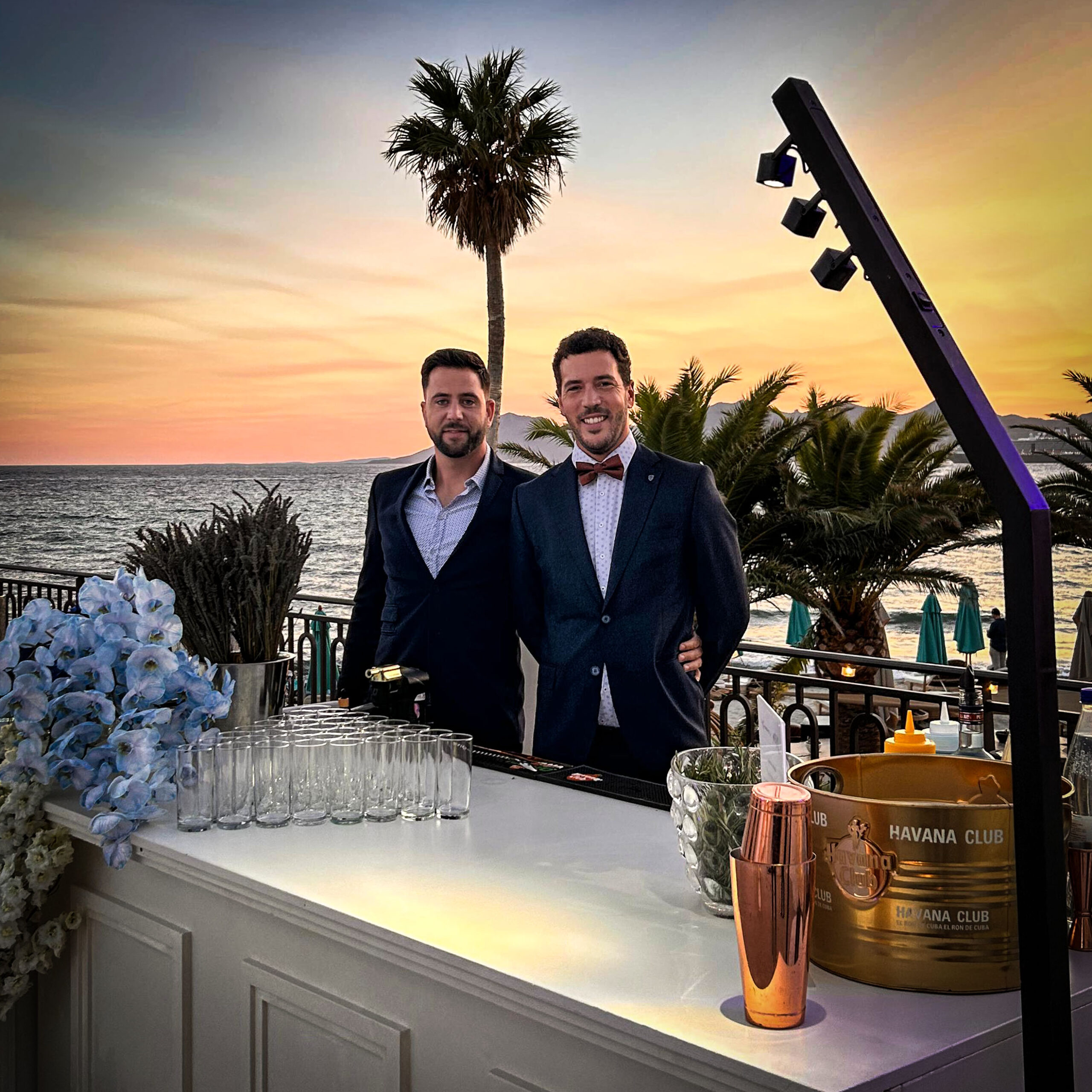
Plan a short menu with two or three cocktails, one mocktail, still and sparkling water, then wine or champagne if the meal calls for it. Alcohol-free drinks should be easy to see and served in the same quality of glassware as the rest of the menu.
Syrups, infusions and some premixed bases can be prepared the day before and refrigerated. Fresh citrus, herbs, sparkling ingredients and ice should be added as late as possible to preserve freshness, carbonation and controlled dilution.
Four options make a generous menu. Beyond that, the shopping list grows, guests take longer to choose and consistent service becomes harder to maintain. A focused menu also leaves more room for personalisation.