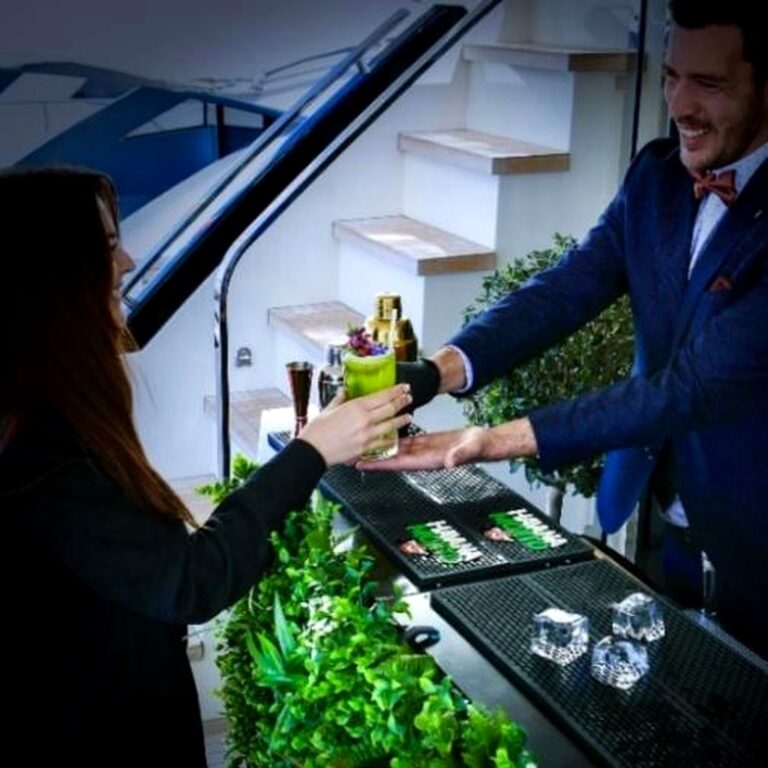
The first decision is not the flavour of the cocktail. It is when you want to bring everyone together. Welcoming guests at the bar before a speech calls for a different arrangement from opening service to the whole room after the applause. Include the first drink in the event’s running order.
If the speech includes a toast, agree when glasses will be prepared and distributed. The bartender needs to know the cue, how delays will be handled and who makes decisions on site. Shaking drinks and conversations at the counter can distract from a speaker, so plan a quieter phase during the address.
An event bar should then leave space for conversations without obstructing arriving guests. A New Year reception does not need constant entertainment. The bar creates a natural pause in the programme, and that pause deserves as much preparation as the speech itself.
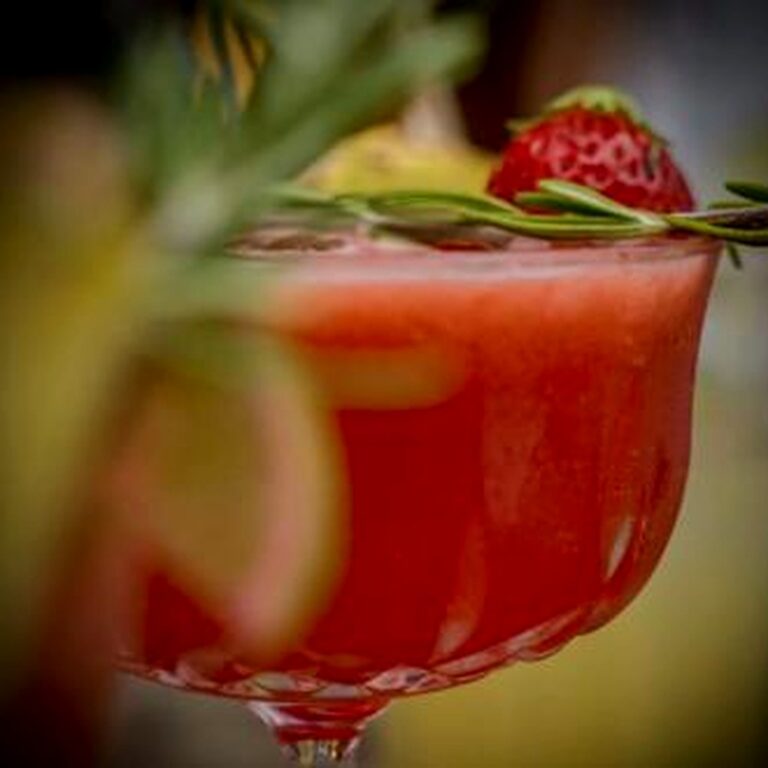
Yes, provided you build a proper menu rather than a collection of juices. An alcohol-free recipe needs character from its very base. Tea brings aromatic structure, an infusion adds floral notes and citrus gives brightness. Texture and finish matter just as much as the colour in the glass.
For the Saica New Year reception on 15 January 2026, at the Camille Claudel Museum in Nogent-sur-Seine, the So Barman menu brought together five winter creations. Smokey Winter Lavender combines smoked tea, passion fruit, lime, vanilla and cinnamon with a lavender smoke finish under a cloche. Passion d’Hiver takes a more direct approach: Passion fruit, lime, vanilla and fresh ginger.
The contrast gives guests different experiences, not simply different colours. Ask to taste the recipes and understand their ingredients. The almond milk in Rêve d’Hiver, for example, needs to be clearly identified for guests who need that information.
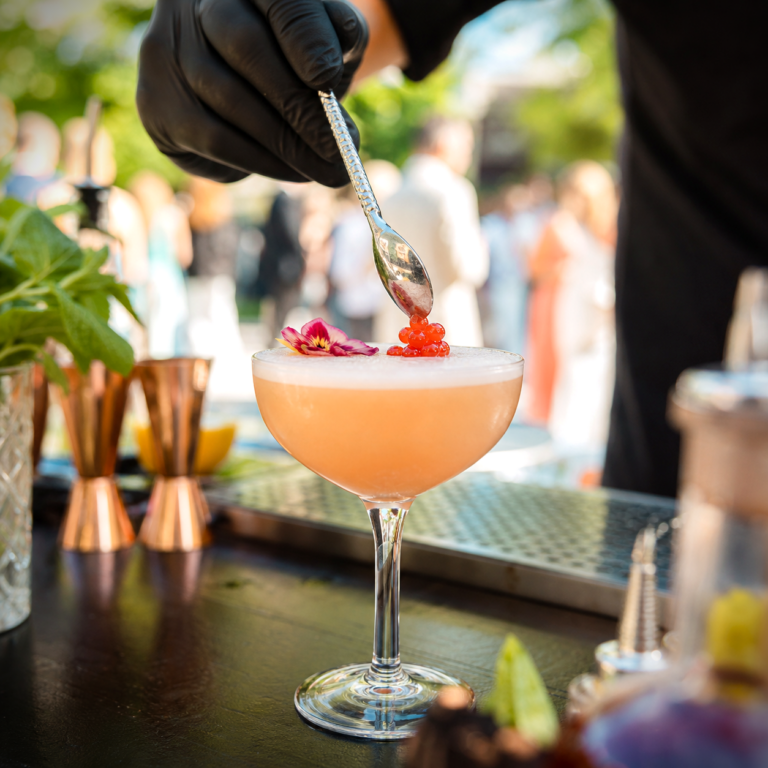
A cocktail named after the company says little if every drink tastes alike. Personalisation should carry through to the tasting experience. Choose an accessible thread: Contrasting flavours, an aromatic palette or a progression from refreshing to richer drinks.
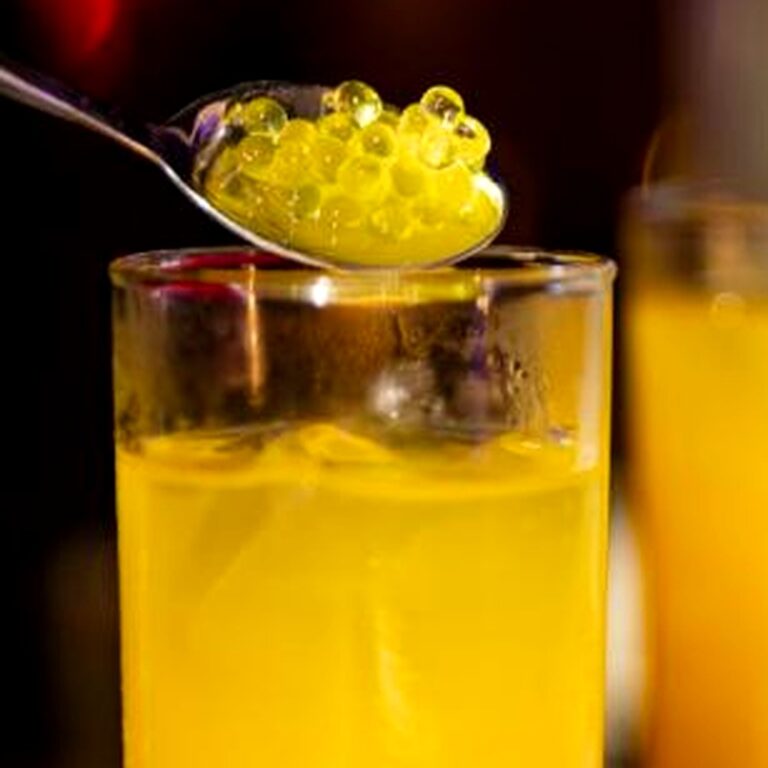
The menu for Sopra Steria’s Form Xperience seminar in May 2026 provides a separate example, not a New Year event. Dark Analysis combined green tea, blackberry and blackcurrant, grapefruit and raspberry pearls. Mango X Impact brought together bergamot tea, mango, pineapple and mango pearls. Both were alcohol-free, with clearly different flavour profiles.
For January, borrow the approach rather than necessarily the recipes. A few plain descriptions on the menu help guests more than mysterious terminology. Renaming an existing drink without considering its balance also misses the point. The reference to your company should feel like an invitation, not an explanation guests must sit through before every sip.
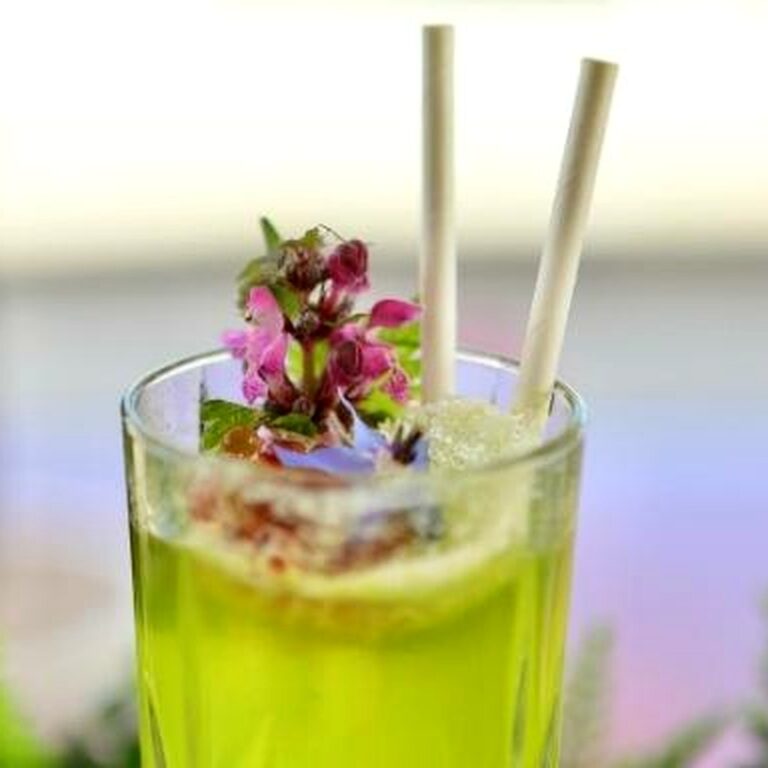
A reception for fifty people can be demanding if everyone orders at once. Total drink volume and peak demand are different problems. One determines ingredients and glassware; the other calls for suitable staffing and preparation methods.
The arrangement prepared for Saica allowed for around 50 guests, 150 mocktails and two professionals: A bar manager who was also a mixologist and flair bartender, alongside a second mixologist, over three hours. These are planning figures for that particular service, not a record of drinks consumed or a staffing rule for every reception.
Discuss the number of recipes, their finishing steps and the time spent with each guest. An individually smoked drink has a different place in service from a recipe without a presentation ritual. For your cocktail bar, clarify the first round, replenishment and any reserve stock. Extra ingredients cannot replace an available service station when the queue grows.
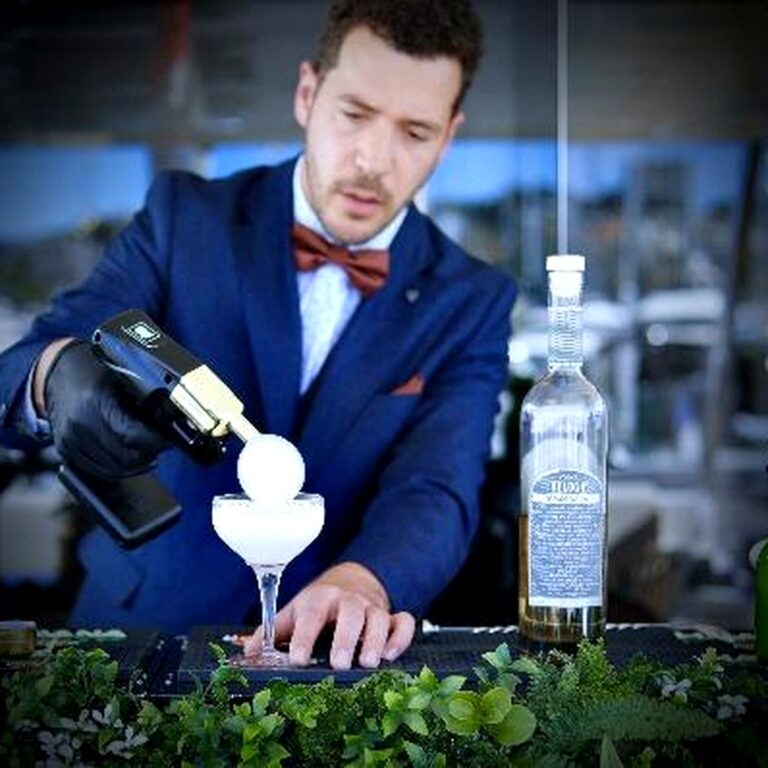
Flavour pearls, smoke under a cloche and Working Flair place different demands on a venue. Choose the effect after checking the location’s constraints. Something suitable for an open space is not automatically appropriate in an auditorium or near artworks.
For molecular cocktail entertainment, ask the venue manager to approve the proposed techniques. The Saica example is not blanket permission to use smoke effects in museums. Where an effect is unsuitable, an aromatic garnish or flavour pearls may retain the interest of the tasting without replicating that particular arrangement.
Confirm the bar position, access, supplies, ice, glass returns and installation times as well. A flair bartending show needs its own time slot, space and technical approval. Entertainment should neither drown out the speech nor bring drinks service to a halt just when guests need it most. Keeping those priorities clear makes the event easier to enjoy.
Compare a complete service, not just a price per drink. For a conventional event bar in France, the indicative market benchmark used here is €9 to €13 excluding VAT per cocktail served, including staff, equipment and ingredients. This is neither a So Barman rate nor a quotation for molecular entertainment: Techniques, venue and scope can change the total.
An alcohol-free service still involves preparation, ingredients, glassware and staff. It is not necessarily cheaper. Request a tailored quotation that specifies:
When preparing a January reception, send these details with the programme and venue constraints. That makes it possible to judge what genuinely adds to the occasion. A memorable welcome does not depend on how many effects you include. It depends on how well the whole experience fits together.

